Moonflower Cup
A mug that changes shape to signal when tea is ready to drink.
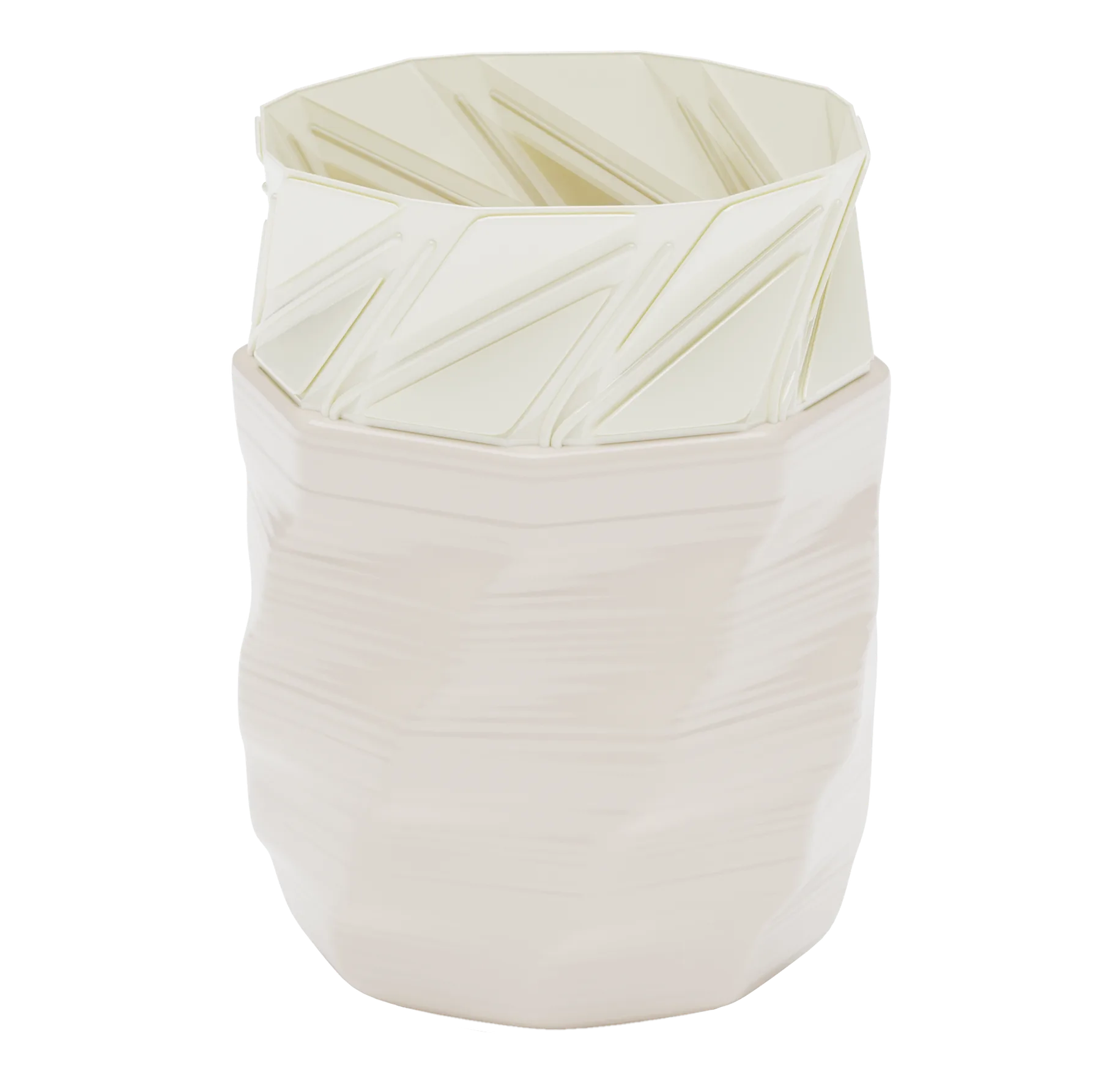
Inspired by moonflowers, which bloom only in response to specific conditions, this mug uses a temperature-responsive rim to indicate to the user when tea has cooled to a comfortable drinking temperature. Instead of requiring the user to check a thermometer or test the drink, the mug makes temperature visible through its changing form.
Selected through a juried RISD competition for Origami Unfolded at the Peabody Essex Museum, December 5, 2026–September 17, 2028.
How it works
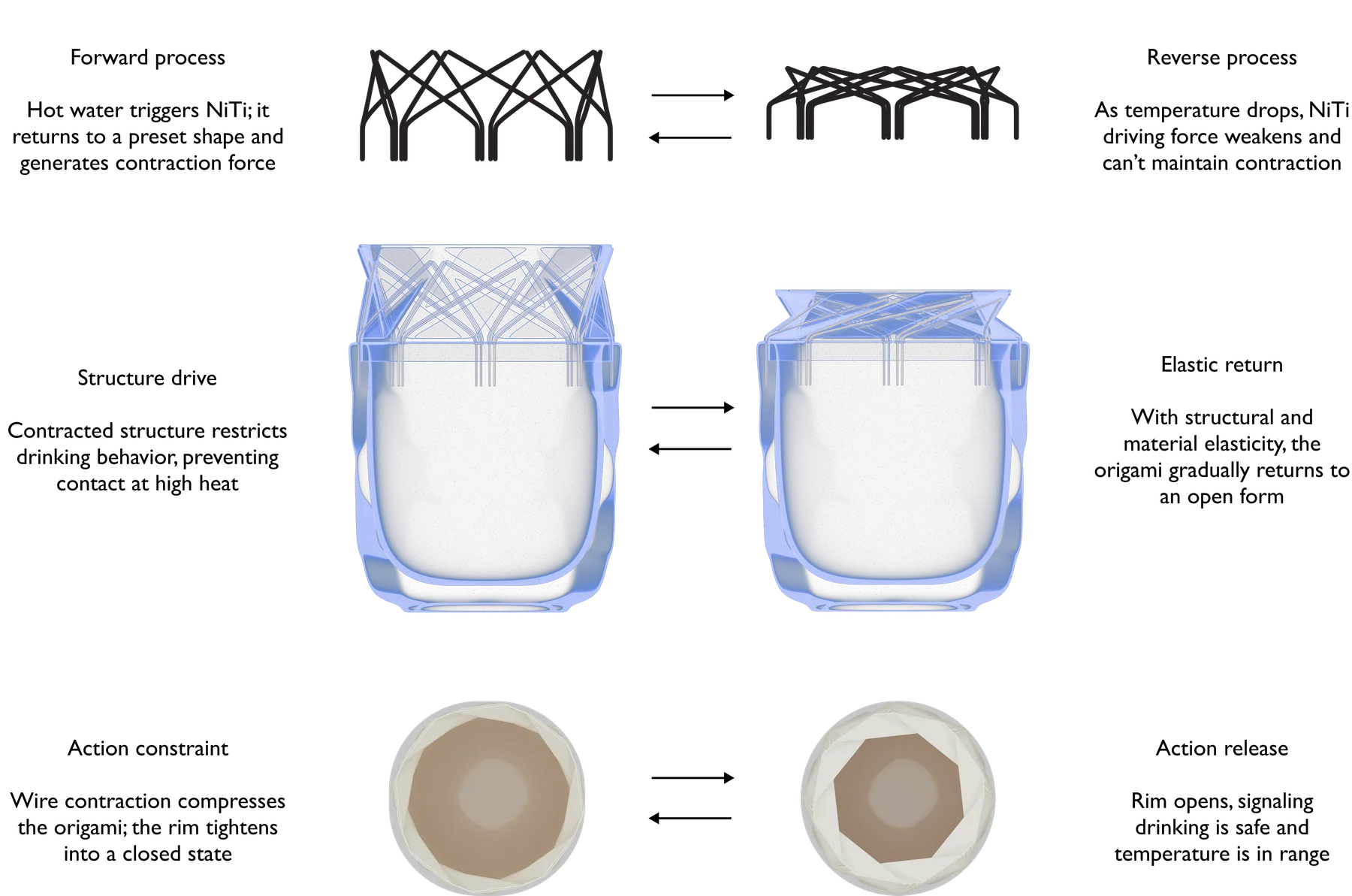
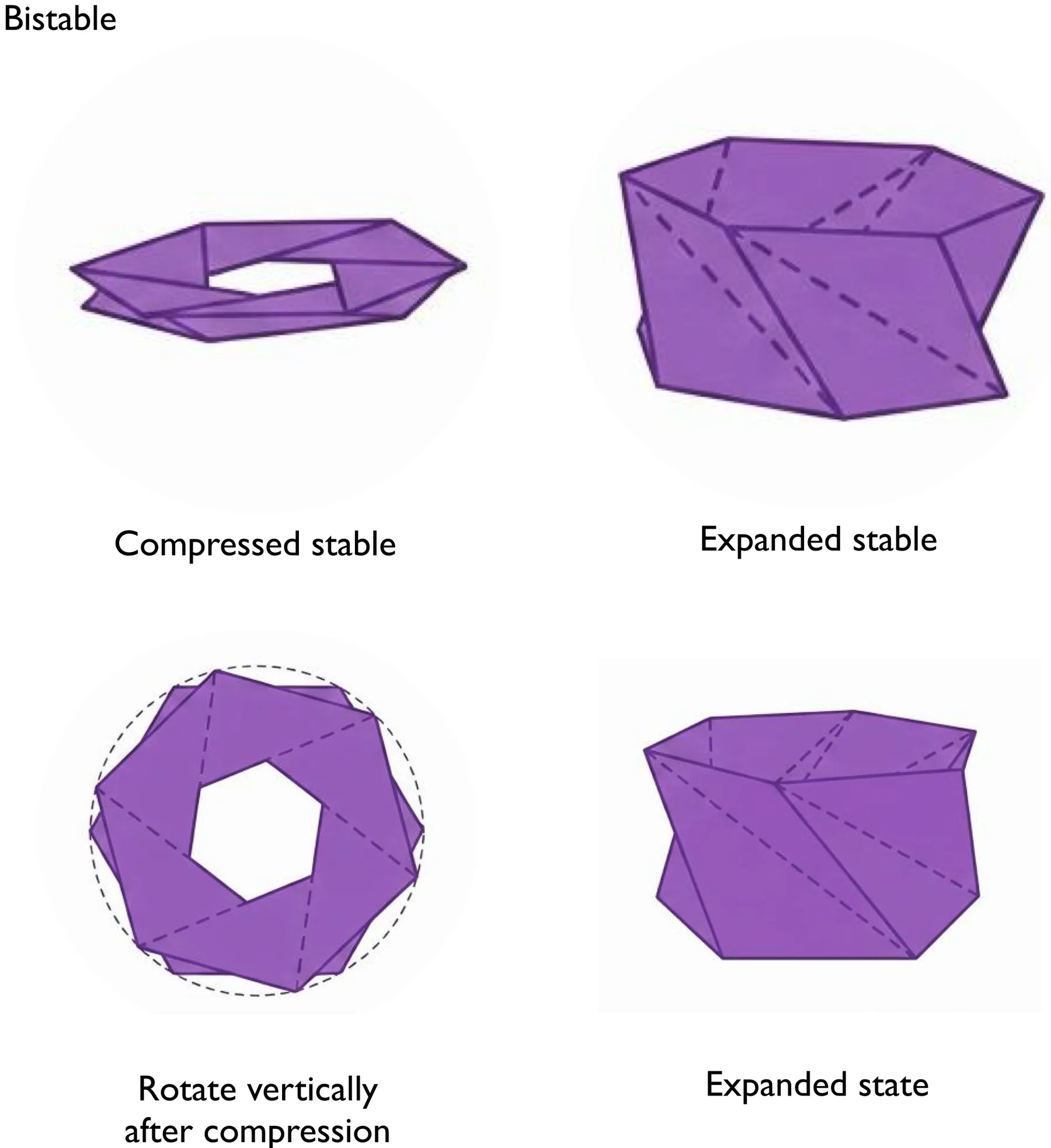
When hot tea is poured into the mug, a shape-memory nitinol actuator contracts a flexible silicone origami structure around the rim. As the tea cools, the rim gradually expands, creating an intuitive visual and tactile signal that the drink is ready.
Development
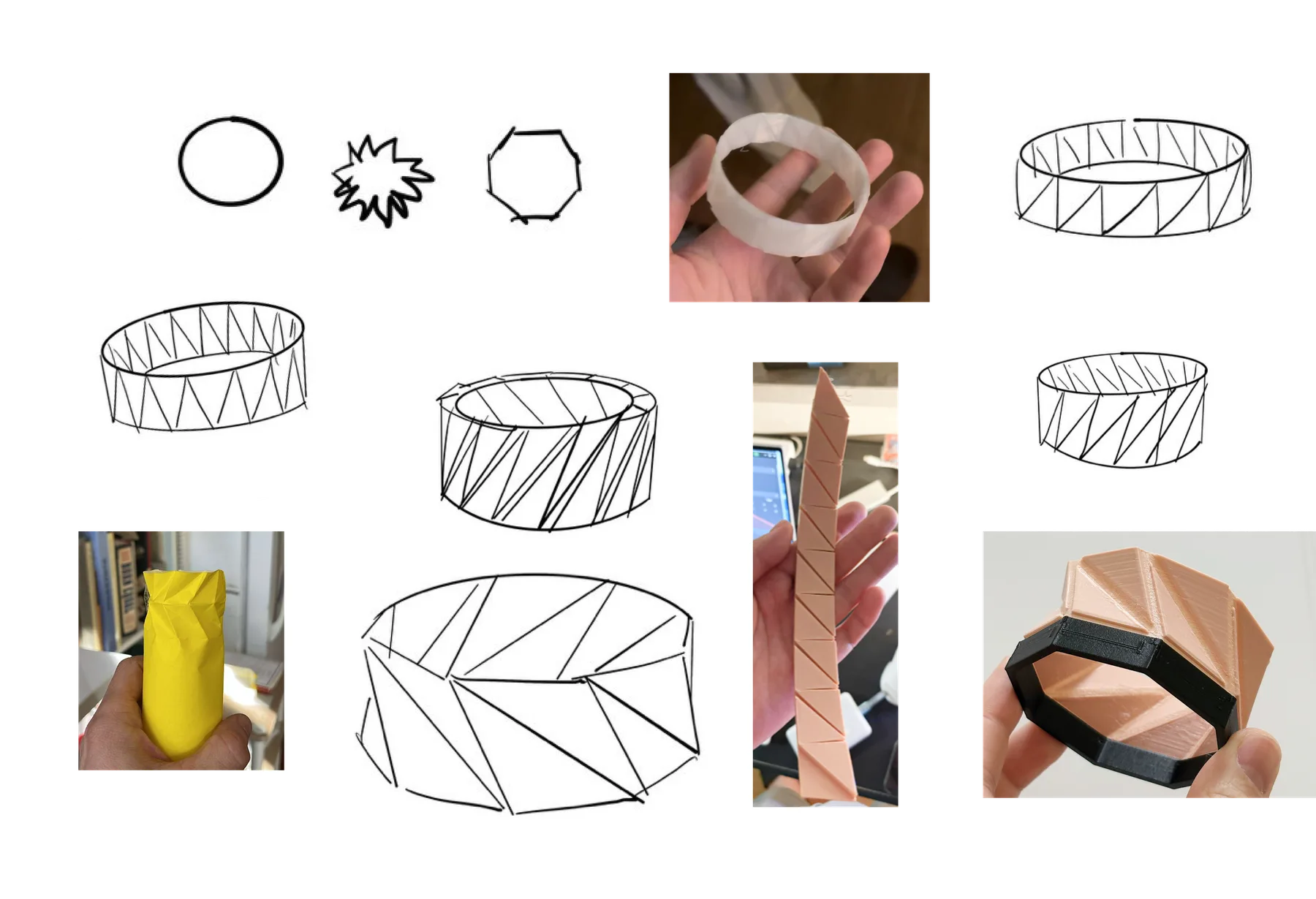
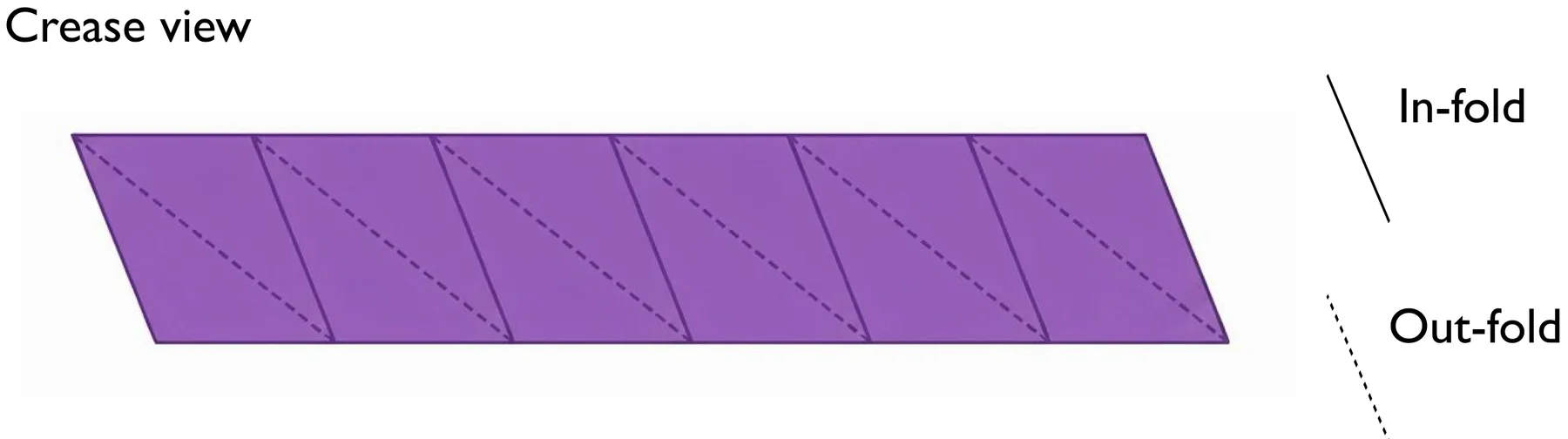
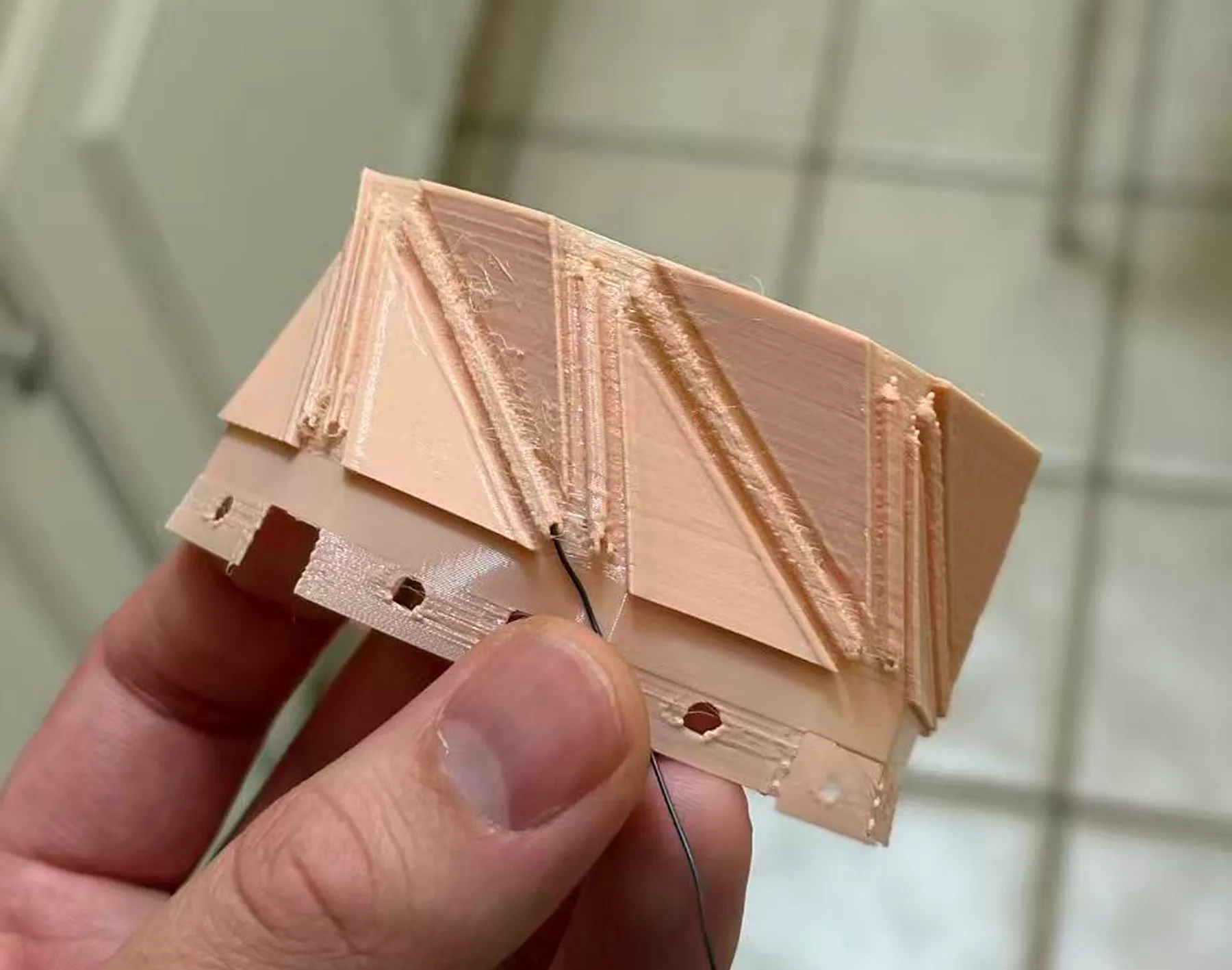
We explored origami structures that could translate a small mechanical movement into a visible change in form, ultimately selecting a Kresling fold. Through more than 30 paper iterations, I refined the folding geometry, ergonomics, materials, and interaction before translating the system into a functional prototype.
I co-developed the concept and led the industrial design, material strategy, ergonomics, and mechanism research. Jialong Lai translated the final folding geometry into CAD and led prototype fabrication.

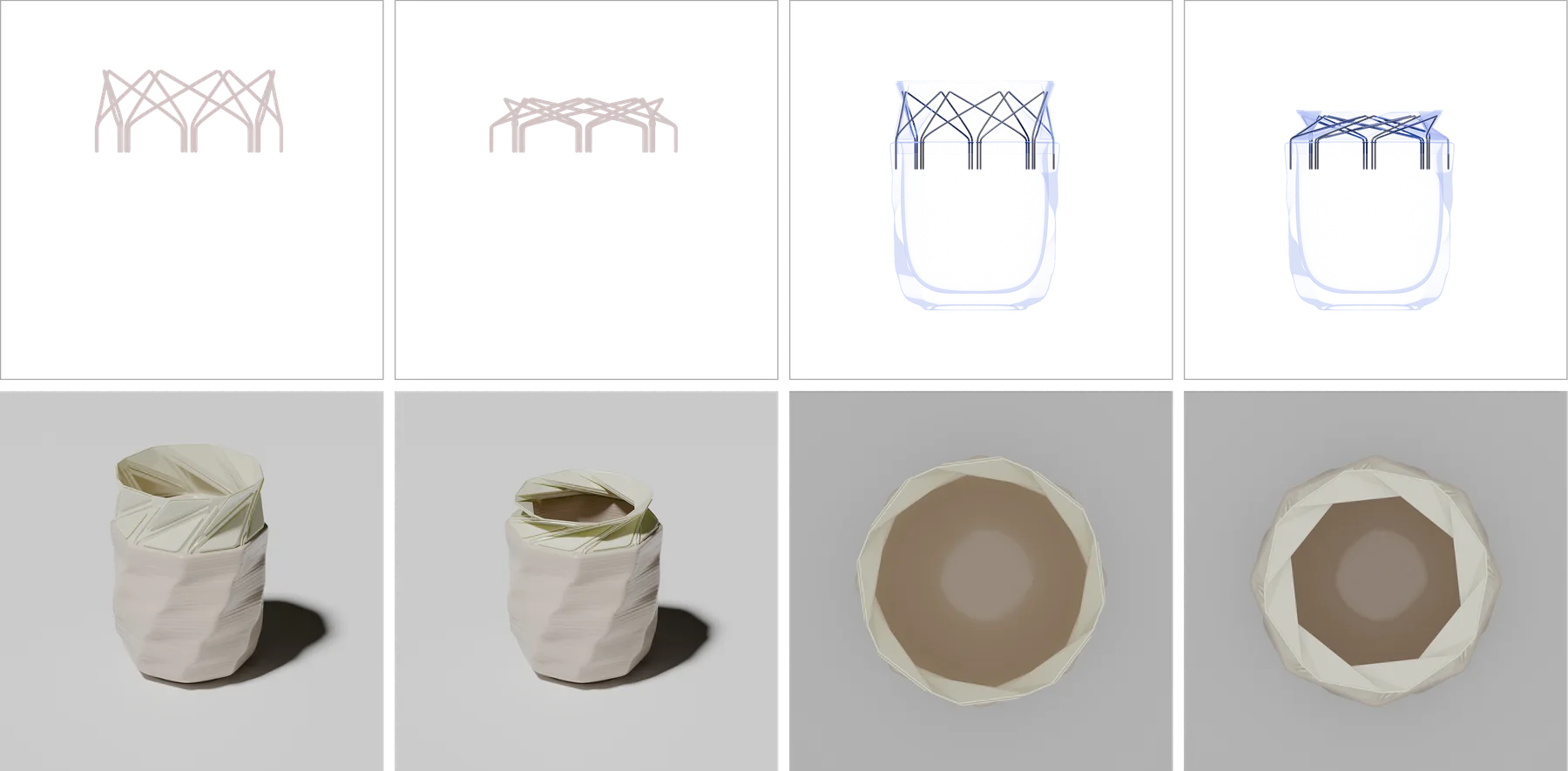
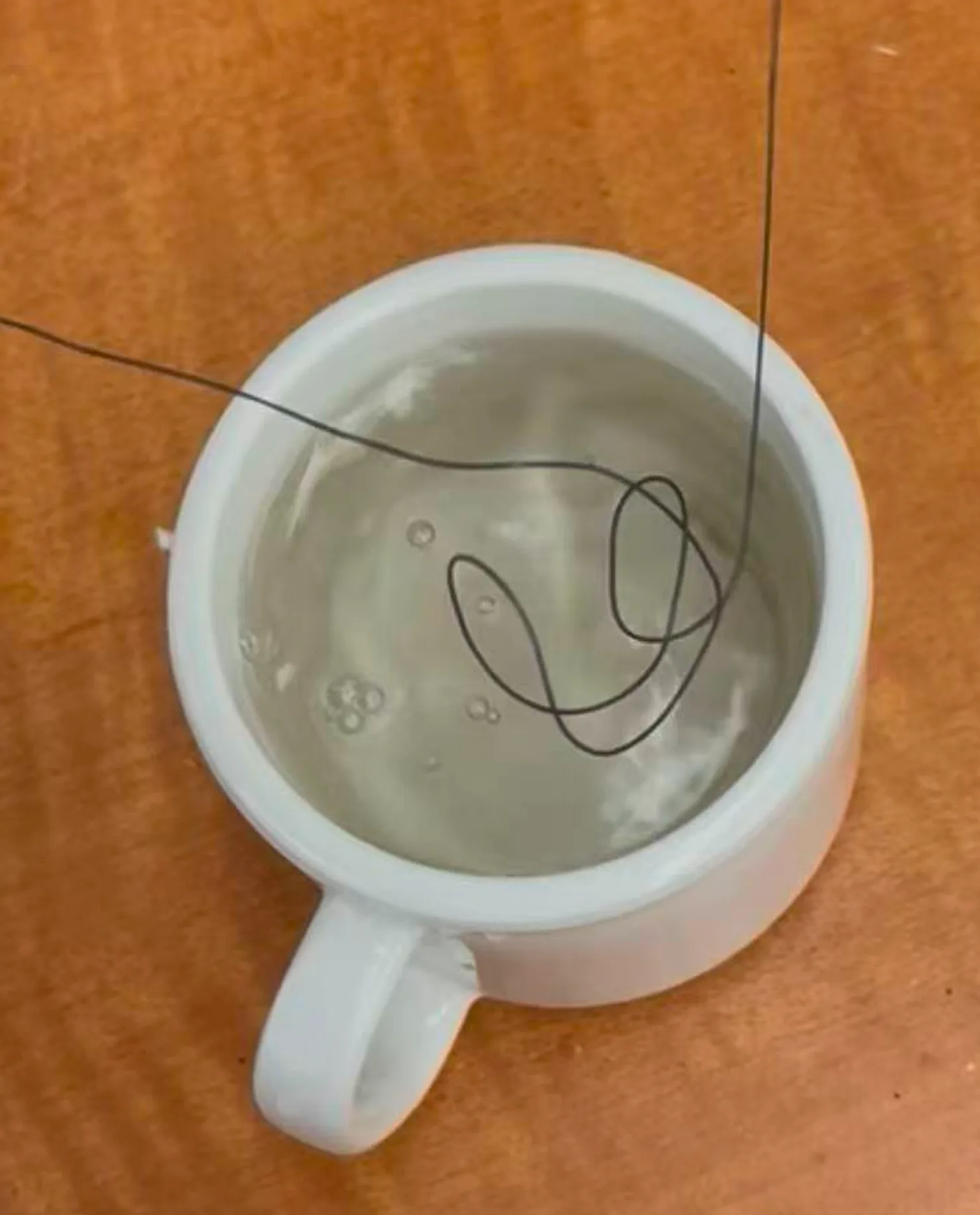
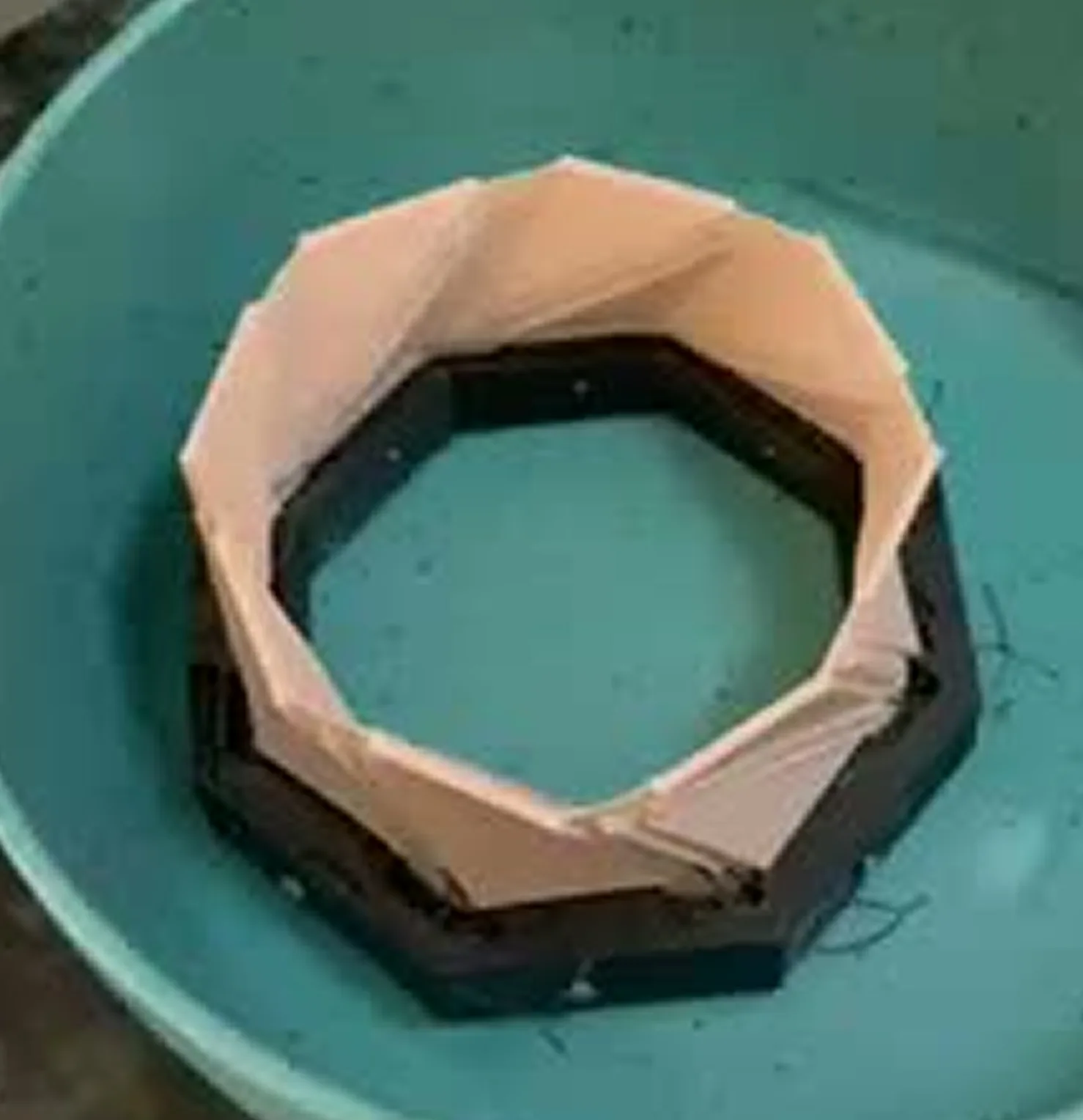
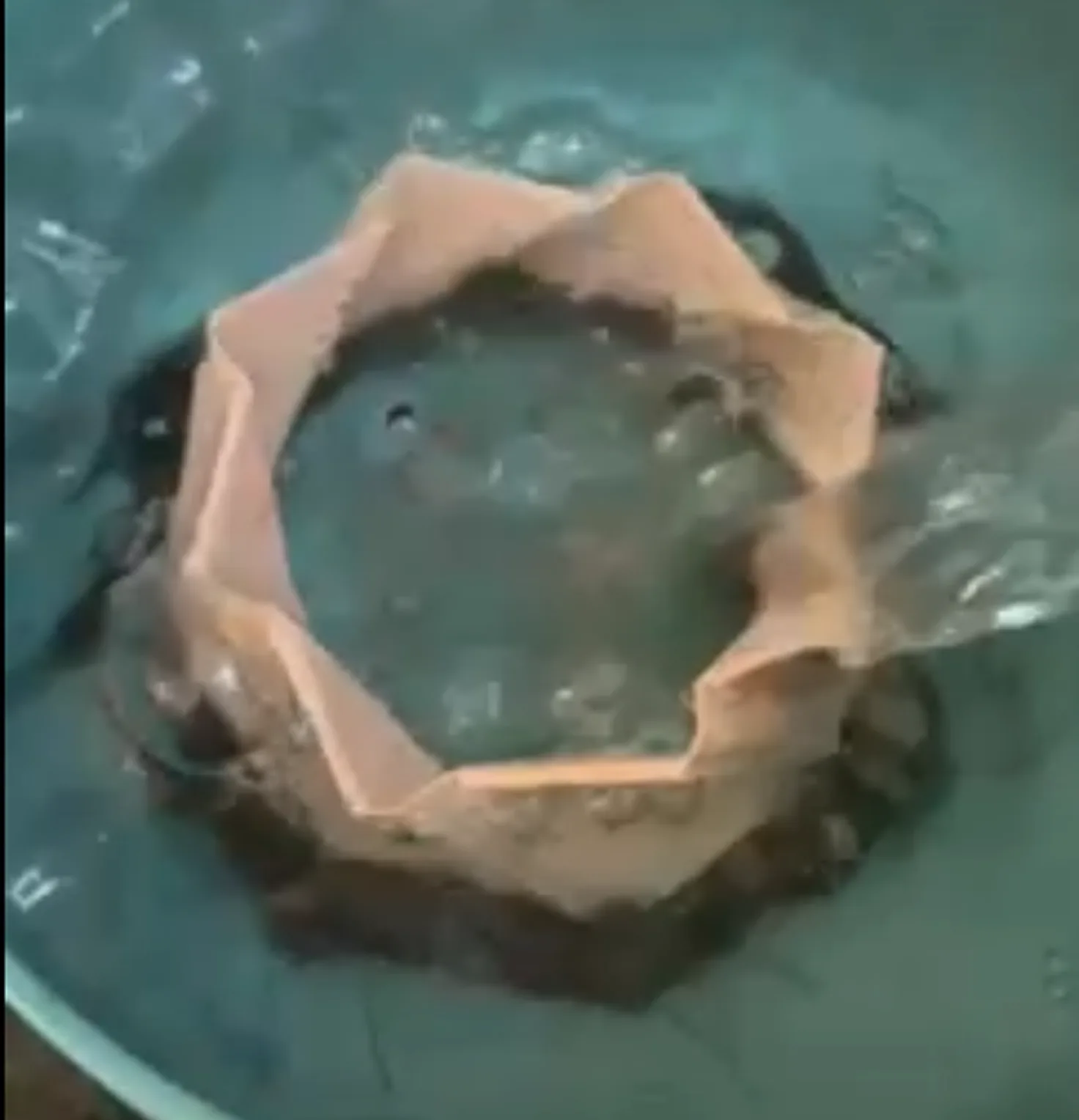
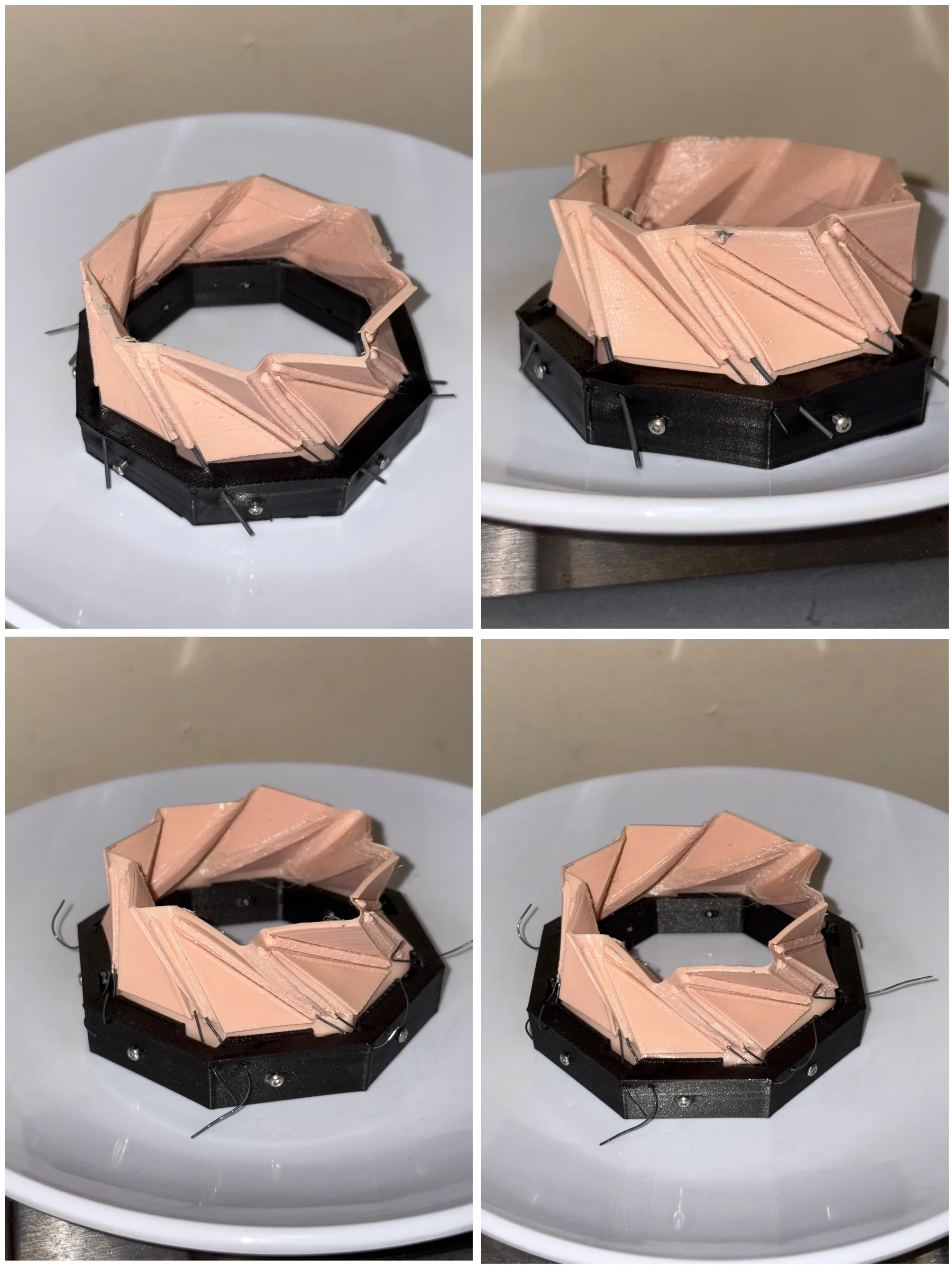
Nitinol wire programmed with shape memory contracts when heated, compressing the silicone lip of the mug. The sequence shows the wire’s placement and transformation.
Prototype Test
We used 0.5 mm NiTi wire with a response temperature of 70 °C. The prototype is 3D-printed in 95A TPU for flexibility with support.
- Skills
- Concept development
- Industrial design
- Human factors
- Material research
- Prototyping
- Collaborator
- Jialong Lai
- Instructor / Juror
- Michael LaFosse